Navigating the Maze: A Comprehensive Guide to Funding and Grants for Expat Entrepreneurs in the UK

The United Kingdom has long been a global magnet for innovation, culture, and business. From the bustling tech hubs of Shoreditch to the financial power of the City of London and the creative clusters in Manchester and Edinburgh, the UK offers a fertile ground for startups. However, for an expat entrepreneur, the journey is often layered with complexities that domestic founders might not face. Beyond the initial excitement of a new market lies the daunting task of securing capital in a foreign financial ecosystem. Whether you are in the UK on an Innovator Founder visa or have established residency, understanding the landscape of funding and grants is crucial for turning your vision into a viable enterprise.
The Expat Context: Visas and Eligibility





Before diving into the pounds and pence, it is vital to address the elephant in the room: your legal status. For many expat entrepreneurs, the ability to access funding is tethered to their visa type. The ‘Innovator Founder’ visa, which replaced previous routes, requires your business idea to be innovative, scalable, and viable. Crucially, while this visa allows you to run a business, it doesn’t automatically grant you access to public funds (benefits). However, it does not bar you from seeking private investment or government-backed business loans.
One of the biggest hurdles for newcomers is the lack of a UK credit history. Traditional high-street banks can be notoriously conservative when dealing with individuals who haven’t spent years within the UK’s financial system. This is where specialized funding routes and government-backed schemes become the lifeblood of expat-led startups.
Government-Backed Support: The British Business Bank
The UK government is keen to maintain the country’s status as a ‘startup nation.’ The primary vehicle for this is the British Business Bank. Their ‘Start Up Loans’ scheme is a standout option. It offers personal loans for business purposes of up to £25,000 at a fixed interest rate (currently 6% per annum).
For an expat, this is a golden opportunity because the loan is based on the individual’s creditworthiness and the strength of the business plan, rather than the business’s trading history. You can apply if you have lived in the UK for at least a year and have the right to work here. They also provide 12 months of free mentoring, which is invaluable for someone navigating the UK’s specific regulatory and cultural business norms.
The Holy Grail: Innovate UK and Sector-Specific Grants
When people talk about ‘free money,’ they are usually referring to grants. Unlike loans, grants do not have to be repaid, and unlike equity funding, you don’t give away a piece of your company. However, they are highly competitive.
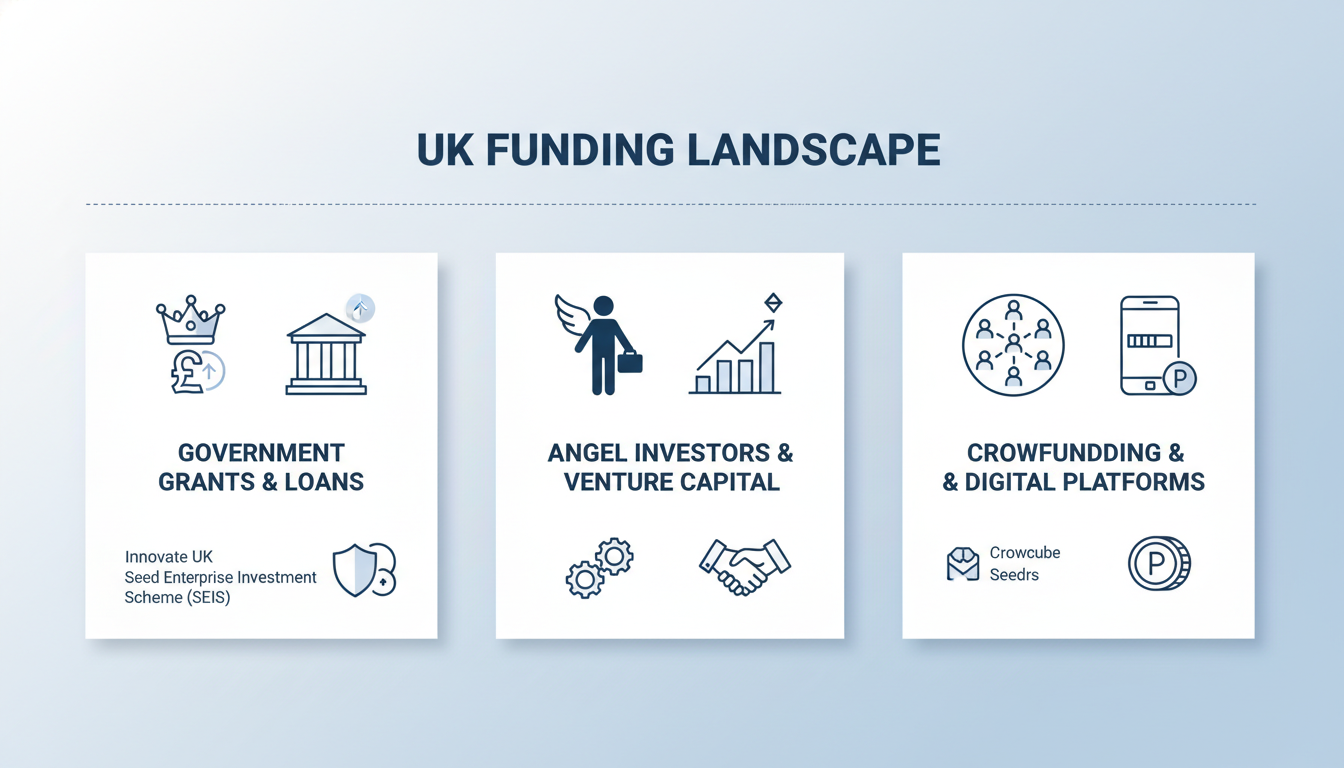
Innovate UK is the UK’s national innovation agency. They offer ‘Smart Grants’ and thematic competitions for businesses developing high-growth, disruptive innovations. As an expat entrepreneur, you are eligible to apply as long as your business is registered in the UK. The catch? Most grants require ‘match funding,’ meaning the grant might cover 70% of your costs, and you must find the remaining 30% from other sources.
Tax Incentives: The Secret Weapon for Attracting Investors
One of the most significant advantages of starting a business in the UK is the Seed Enterprise Investment Scheme (SEIS) and the Enterprise Investment Scheme (EIS). These are not direct grants, but they are powerful tools for raising capital from ‘Angel Investors.’
Under SEIS, individual investors can receive a 50% tax break on investments up to £200,000. If your business fails, the investor can even claim further loss relief. For an expat founder, getting your company ‘SEIS/EIS pre-assured’ by HMRC (the UK tax office) is like having a stamp of approval. It makes your startup significantly less risky for UK-based investors, effectively incentivizing them to put money into your vision.
Regional Funding: Looking Beyond London
While London is the default choice for many, the UK government’s ‘Levelling Up’ agenda means there is significant funding available in other regions.
1. Scotland: Scottish Enterprise offers a range of grants and high-growth ventures support specifically for businesses based in Scotland.
2. Wales: Business Wales provides access to the Development Bank of Wales, which offers micro-loans and equity investments.
3. Northern Powerhouse: If you set up in cities like Manchester, Leeds, or Newcastle, you can access the Northern Powerhouse Investment Fund (NPIF).
Expats often find that moving to these regions not only lowers their operational costs but also increases their chances of securing localized grants that are less crowded than those in the capital.
Alternative Finance and Crowdfunding
If traditional banks say no, the UK’s thriving fintech sector often says yes. Platforms like Tide, Starling, and Revolut Business have streamlined the process for expats to set up accounts and access small-scale credit.
Furthermore, the UK is a global leader in equity crowdfunding. Platforms like Seedrs and Crowdcube allow you to raise money from the general public. This is a double-win: you secure funding and build a community of brand ambassadors simultaneously. For an expat founder, this can be a great way to prove ‘market fit’ to larger VC firms later on.
Tips for a Successful Funding Application
To succeed in the UK funding landscape, you need more than just a good idea. You need a rock-solid ‘UK-centric’ strategy:
- Polish Your Business Plan: UK investors and grant bodies look for realistic financial projections and a deep understanding of the local competitive landscape.
- Network Relentlessly: Join organizations like the Federation of Small Businesses (FSB) or local Chambers of Commerce. Many funding opportunities are found through word-of-mouth.
- Seek Professional Advice: Tax schemes like SEIS/EIS have strict compliance rules. Hiring a UK accountant early on can save you from costly mistakes.
- Focus on Sustainability: Increasingly, UK grants are tied to ‘Net Zero’ targets. If your business can demonstrate a positive environmental impact, doors will open much faster.
Conclusion
Raising capital as an expat entrepreneur in the UK is undoubtedly a marathon, not a sprint. It requires a blend of resilience, local networking, and a deep dive into the specific incentives the UK government provides to foster innovation. While the lack of local credit history may be a temporary hurdle, the sheer volume of available grants, tax-efficient investment schemes, and regional support makes the UK one of the most supportive environments in the world for international founders. By leveraging these tools, you can transform your status from a newcomer to a cornerstone of the British economy.